
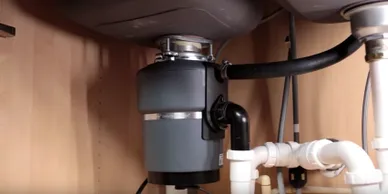
The garbage disposal is a convenience many homeowners rely on, but it’s also one of the most frequent sources of kitchen plumbing calls. Proper use and maintenance are essential to keep your sink draining smoothly.
The Do’s and Don’ts of Disposals
Disposals are designed to handle only small amounts of soft food scraps and water. Avoid putting these items down your drain:
| DO NOT Put Down the Disposal | What Happens |
| Grease, Oil, and Fat | Coats the blades and hardens in the pipes, creating stubborn clogs. |
| Fibrous/Starchy Items (Celery, potato peels, banana peels, asparagus) | The fibers wrap around the blades, causing jams and eventual motor burnout. |
| Coffee Grounds | They clump together and become a thick, sludge-like paste that collects in the U-trap. |
| Eggshells and Bones | Eggshell membranes can stick to the grinding parts, and bones are too hard to be fully ground. |
How to Fix a Jammed Disposal
If your disposal hums but doesn’t spin, it’s likely jammed. NEVER put your hand down the drain!
- Turn Off the Power: Unplug the unit or switch off the circuit breaker for safety.
- Locate the Flywheel: Many disposals have a small hex-shaped hole (or wrench socket) on the bottom of the unit.5 Insert a specialized disposal wrench or an Allen key and move it back and forth until the blades turn freely.
- Check the Reset Button: After clearing the jam, find the red or black reset button on the bottom or side of the unit and press it.
- Restore Power and Test: Run cold water and flip the switch to confirm it’s operating normally.