
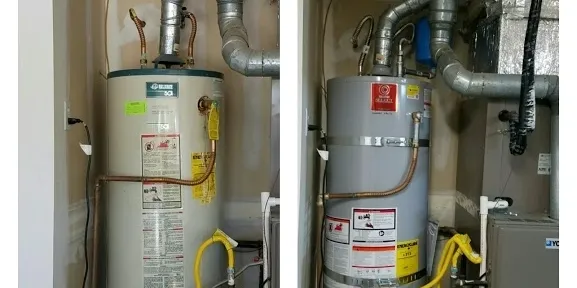
Your water heater is arguably the hardest-working appliance in your home. Proper maintenance not only extends its life but also keeps it operating efficiently, saving you money on energy bills and preventing catastrophic failure.
Annual Water Heater Flush (Draining)
Sediment, primarily minerals like calcium and magnesium builds up at the bottom of the tank over time. This sediment acts as an insulator, forcing the heating element to work harder and creating a grinding or popping noise.
To flush the tank:
- Turn off the power (gas or electric) and the cold water supply valve leading into the heater.
- Attach a hose to the drain valve near the bottom of the tank and run the other end to a suitable drain (like a floor drain or outside).
- Open the drain valve and a nearby hot water faucet to break the vacuum and allow the water to drain completely.
- Once the tank is empty and the water runs clear, close the drain valve, remove the hose, and reopen the cold water supply. Do not turn the power back on until the tank is full!
Inspecting the Anode Rod
The anode rod, often called the “sacrificial rod,” is a vital component. It’s made of a metal like magnesium or aluminum and is designed to slowly corrode instead of the steel tank lining.
You should have a professional inspect the anode rod every 3 to 5 years. If it is less than half an inch thick or heavily coated in calcium, it needs to be replaced immediately to protect the tank from rust and premature failure.